 ← AlgoxFlow
What are 0DTE options?
0DTE is the most traded and least understood corner of the options market. Most of what's written about it is either a promise or a warning. This is the mechanics — including the one table that explains why the cheap contracts are the expensive ones.
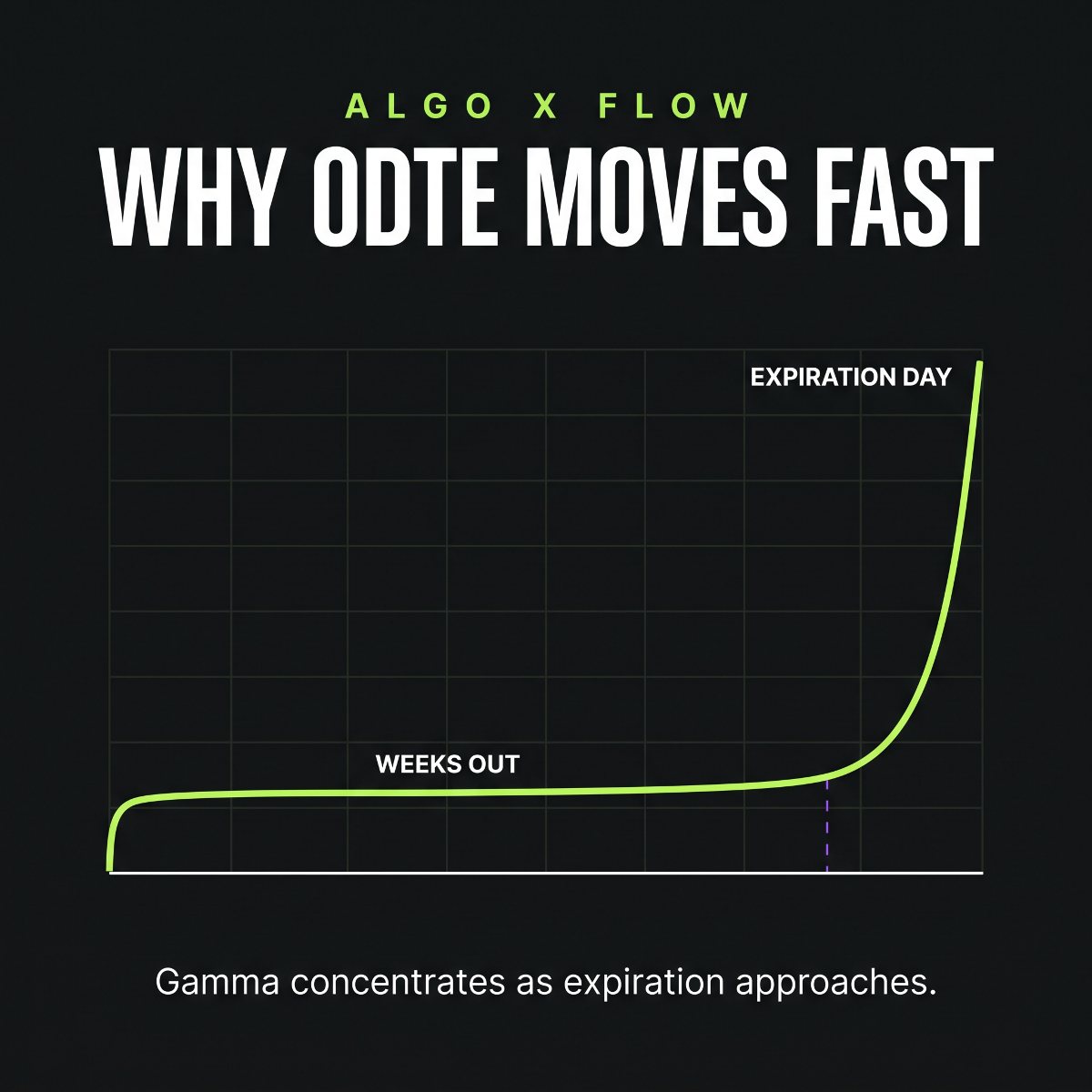
0DTE means zero days to expiration — a contract that expires at the close of the same session you're trading it in. SPY, QQQ, SPX and a handful of other liquid products list expiries every weekday, so there's a 0DTE contract on those names every day the market is open. Same instrument as any other option; the maths just runs at a different speed.
Why they behave so differently
Two forces are extreme on expiry day, and they pull in opposite directions.
That combination is why you see 300% gains and total losses on the same contract within an hour. It is not that 0DTE is more volatile than the underlying — SPY moving 0.4% is an ordinary day. It's that the option's leverage to that move is enormous and its time to be right is zero.
The table nobody shows you
Here's what actually catches people. Say SPY is at 640.00 mid-morning, and you're looking at today's calls. These are representative prices, not a specific session's quotes:
| Strike | Premium | Cost / contract | Breakeven | Move needed |
|---|---|---|---|---|
| 640 (at the money) | $2.10 | $210 | 642.10 | +0.33% |
| 641 | $1.55 | $155 | 642.55 | +0.40% |
| 642 | $1.05 | $105 | 643.05 | +0.48% |
| 643 | $0.66 | $66 | 643.66 | +0.57% |
| 645 (the "cheap" one) | $0.22 | $22 | 645.22 | +0.82% |
The $22 contract looks like the sensible risk. It costs a tenth of the at-the-money one. Small ticket, small risk — that's the reasoning.
But it needs SPY to rise 0.82% to break even, against 0.33% for the at-the-money contract. Two and a half times the move, in the same handful of hours, and if SPY finishes at 645.00 — a big up day, you were right about direction — the contract expires worthless.
Why 0DTE moves the index itself
This is the part generic explainers leave out, and it's the part that's actually useful.
Someone sold you that contract, and they don't want the directional bet. Dealers hedge in the underlying — and because gamma is largest near expiry, those hedges are large relative to the position. On expiry day the hedging flow around heavily traded strikes can rival the real order flow.
Which direction it pushes depends on which side of dealer gamma the market is on:
Hedging is mean-reverting: they sell rallies and buy dips. The index gets damped and can pin near a heavily traded strike for hours. Breakouts fail. This is the more common state.
Hedging runs the other way: they buy strength and sell weakness. Moves get amplified rather than absorbed, and a small push can travel much further than the news deserves.
The dividing line is the zero-gamma flip, and it's calculable from the options chain before the session starts. That single fact — whether the tape you're trading into is damping or amplifying — matters more for a 0DTE trade than any indicator, because you have no time to be early.
What actually kills accounts
It isn't the expiry date. Three things do the damage, and none of them are unique to 0DTE — they're just unforgiving here because there's no time to recover.
Nobody blows up on one 0DTE trade. They blow up taking four of them, at increasing size, to get back to flat.
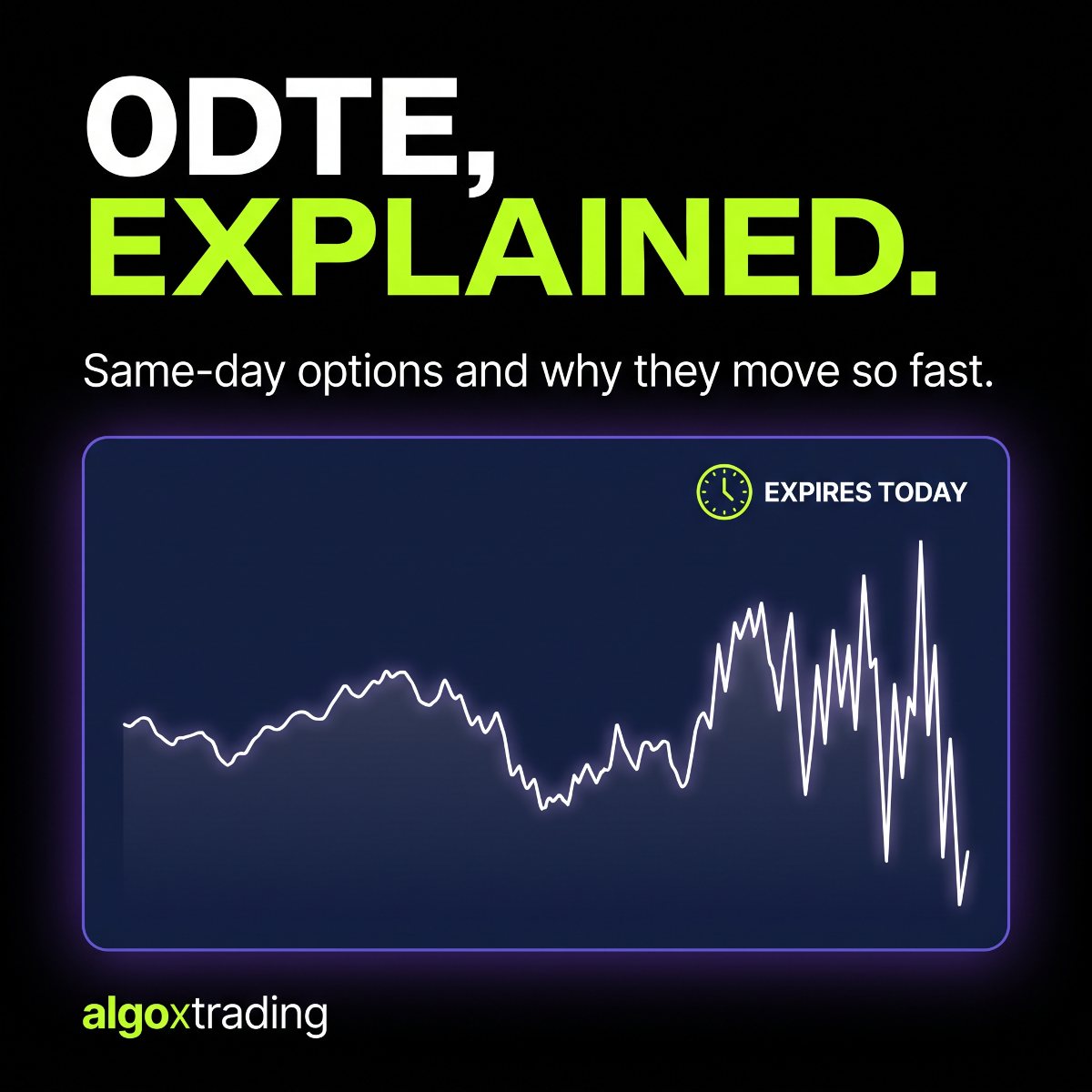
Is 0DTE gambling?
The expiry date isn't what makes a trade gambling. A 0DTE contract bought with a level, a size that survives being wrong, and an exit decided in advance is a defined-risk trade. The same contract bought with none of those is a coin flip with a spread attached. Same instrument, different process.
That said — an honest caveat, because the internet is full of people who won't give you one. 0DTE is genuinely less forgiving. Being right a day early is the same as being wrong. If you're still learning how options price, longer-dated contracts leave you room to be imperfect, and that room is worth more than the leverage you're giving up.
If you're going to trade them
- Trade closer to the money. Higher delta, nearer breakeven, less reliance on a big move. Costs more per contract, so take fewer.
- Know the gamma regime first. Damping or amplifying changes which setups work. Check it before the open, not after you're in.
- Have the level before the entry. There's no time to work out what you think while the position moves.
- Set the exit in advance — both directions. You will not make a good decision in the moment on a contract this fast.
- Size for a total loss. Not as a worst case. As a normal Tuesday.
Frequently asked
What does 0DTE mean in options?
Zero days to expiration — a contract expiring at the close of the same session it's traded in. SPY, QQQ, SPX and several other liquid products list expiries every weekday, so a 0DTE contract exists on those names every trading day.
Why do 0DTE options move so fast?
Gamma peaks near expiry, so delta swings violently as price crosses the strike, while theta is extreme because all remaining time value must reach zero by the close. Together they produce triple-digit percentage swings on underlying moves well under 1%.
Are 0DTE options gambling?
Not inherently — the expiry date isn't what determines that. With a level, survivable size and a predetermined exit it's a defined-risk trade; without them it's a coin flip. But 0DTE is less forgiving than longer-dated options, because being early is indistinguishable from being wrong.
Why do cheap out-of-the-money 0DTE options lose money?
The low price buys a much larger required move. A contract at a tenth of the at-the-money premium can need roughly 2.5x the move just to break even, and it expires worthless if it finishes even a cent out of the money. Cheap ticket, near-certain total loss.
How does 0DTE affect the index itself?
Dealers hedge the contracts they sell, and expiry-day gamma makes those hedges large. Long gamma damps the index toward busy strikes; short gamma amplifies moves. That's why an index can pin for hours or accelerate away — and it's strongest on expiry day.
Where can I check the gamma regime before trading 0DTE?
Our free gamma map gives the zero-gamma flip, call wall, put wall and max pain for any ticker from today's chain, and the market regime board shows where SPY, QQQ, IWM and DIA sit against their flips. Both free, no signup.
Check the gamma regime before you trade the day
Zero-gamma flip, call wall, put wall and max pain for any ticker — calculated live from today's options chain. Free, no signup, no card.
Educational content from AlgoX Flow · not financial advice · options carry substantial risk of loss, and 0DTE contracts can lose 100% of their value in a single session.