 ← AlgoxFlow
What is a gamma squeeze?
Every so often a stock rips 30, 50, 100% in days on no real news — and the culprit isn't buyers of the stock, it's buyers of call options forcing everyone else's hand. That's a gamma squeeze: a self-feeding loop where options dealers are forced to buy shares to hedge, which pushes price up, which forces them to buy even more. Here's the mechanism, what fuels it, and why it ends so violently.
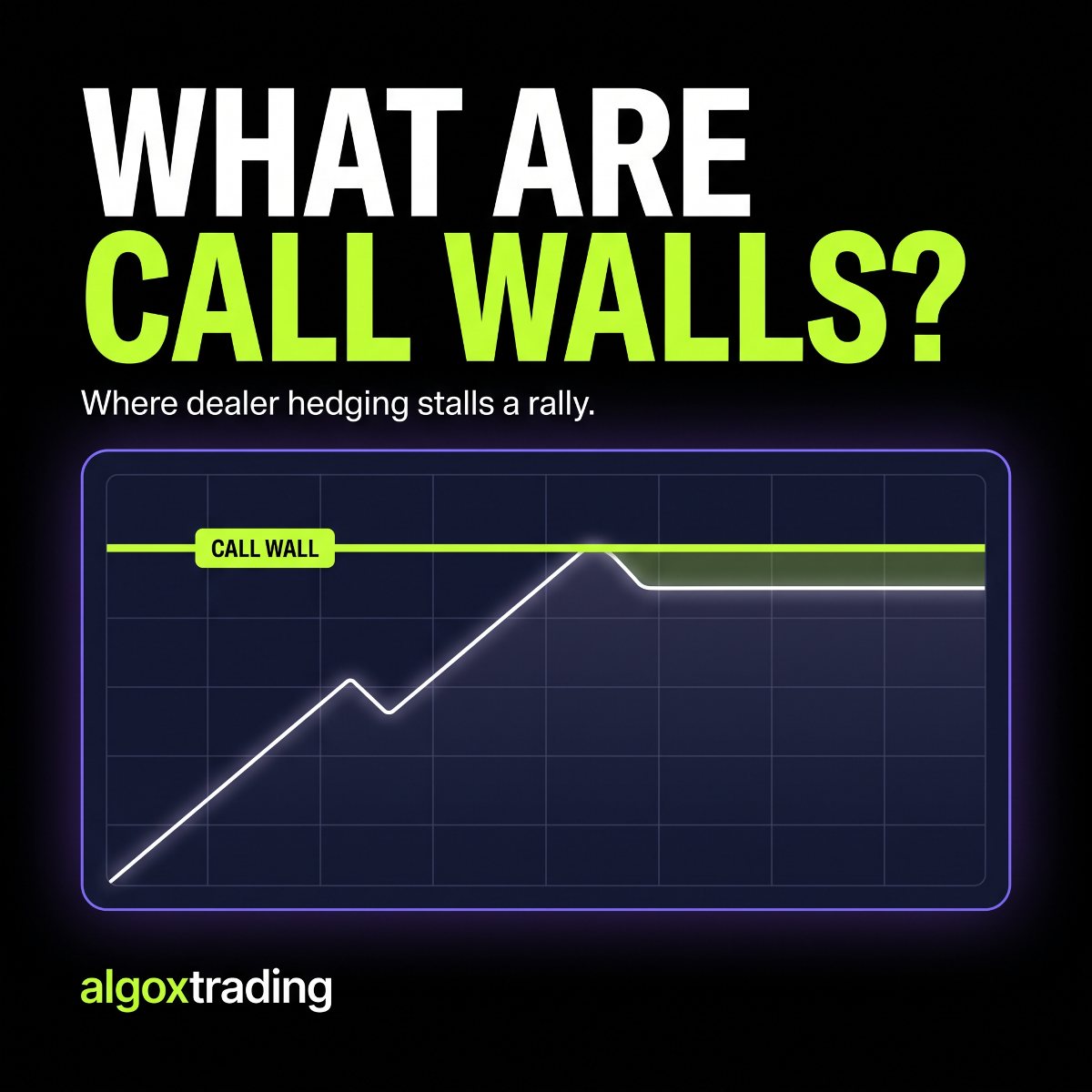
A gamma squeeze happens when traders buy a flood of call options. The dealers who sold those calls are now short and must buy shares of the stock to stay hedged. That buying pushes the price up — which raises the calls' delta (through gamma) — which forces dealers to buy even more shares. Each up-tick triggers the next, so the stock spikes far faster than fundamentals justify. It's a mechanical feedback loop, and when the call buying stops or the options expire, the forced buying vanishes and the move can reverse just as fast.
The loop, step by step
Dealers (market makers) don't want a directional bet — they sell you the call and immediately hedge so they're neutral. That hedging is the whole engine:
The key is gamma — the rate at which an option's delta changes as the stock moves. Near-the-money, short-dated calls have the highest gamma, so a small move in the stock forces a big change in how many shares the dealer must hold. That's why gamma squeezes run on cheap, short-dated, near-the-money calls — they pack the most hedging punch per dollar.
Gamma squeeze vs short squeeze
They get used interchangeably, but they're different engines — and they often stack:
Driven by options dealers forced to buy shares to hedge calls they sold. The fuel is call-option buying.
Driven by short sellers of the stock forced to buy shares to cover losing shorts. The fuel is a crowded short.
When a heavily-shorted stock also gets a wave of call buying, the two loops feed each other — dealer hedging drives price up, which squeezes shorts, whose covering drives price up more, which forces more dealer hedging. That's how the most explosive moves happen.
What it takes to fuel one
A gamma squeeze needs three things lined up at once:
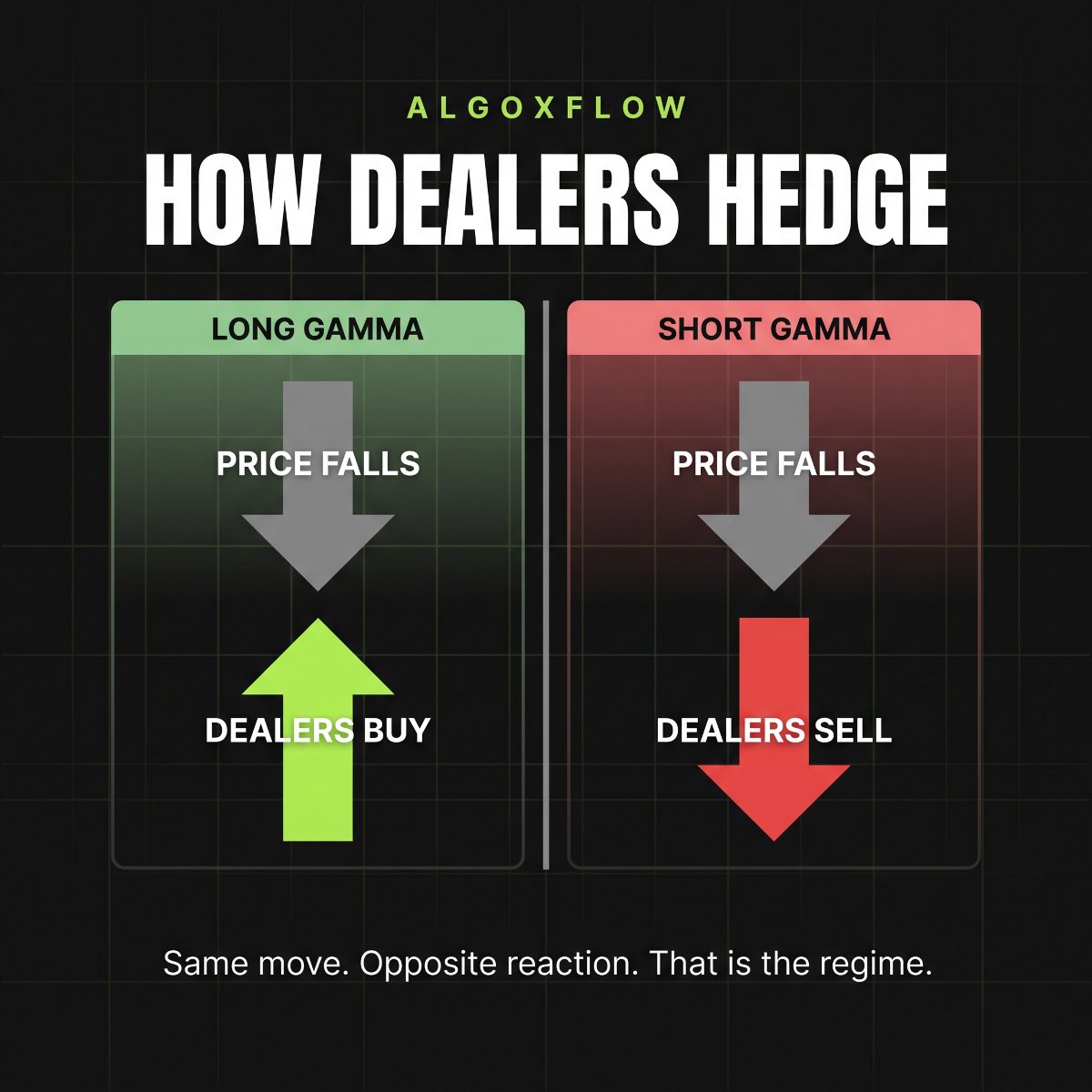
Miss one and it fizzles: call buying into a deep, liquid mega-cap barely moves the tape, and dealers who are long gamma dampen the move instead of amplifying it (that's the positive vs negative gamma distinction).
How it unwinds — the part that hurts
The same loop runs in reverse. The forced buying only lasts while the calls are being bought and held. Once the buying stops — or the options expire and dealers unwind their hedges — that relentless bid disappears, and hedges get sold. A move built on mechanical buying tends to end in mechanical selling:
How we spot the setup early
The fingerprints show up in the flow before the move is obvious: aggressive short-dated call buying at the ask, stacked at strikes just above spot, in a name where dealers are short gamma. Our Conviction Desk surfaces exactly this — it ranks names by call skew, at-ask aggression, wall pressure near spot and short-dated positioning, and flags when dealers look net short gamma. It's the six flow tells pointed straight at the squeeze setup.
Frequently asked
What is a gamma squeeze?
A feedback loop driven by options hedging: heavy call buying leaves dealers short, so they buy shares to stay hedged, which pushes price up, which raises the calls' delta via gamma, forcing more buying. A self-reinforcing spiral that can spike a stock far faster than fundamentals justify.
What's the difference between a gamma squeeze and a short squeeze?
A short squeeze is short sellers of the stock forced to buy shares to cover. A gamma squeeze is options dealers forced to buy shares to hedge calls they sold. Different mechanisms — one is short-covering, one is options-hedging — and they often stack and amplify each other.
What causes a gamma squeeze?
Heavy, aggressive buying of short-dated calls at or just above spot, dealers who are net short gamma on those strikes, and a stock with limited float so the hedging buys actually move the price. All three at once, and the loop feeds itself.
How does a gamma squeeze end?
When the call buying stops or the options expire. Once dealers no longer need to add hedges — or unwind them after expiration — the forced buying vanishes and can flip to forced selling, which is why these often end in a sharp, fast reversal.
Are gamma squeezes bullish?
They produce violent up-moves while they last, but they're a mechanical flow event, not a fundamental one. The move can be far bigger than the news warrants and unwind just as fast. Trade it as a high-risk momentum event with defined risk, not a durable bullish signal.
Catch the setup before it runs
The Conviction Desk ranks the names with the strongest short-dated call flow — the exact fingerprint of a gamma squeeze forming. Top names free; the full board and the calls in real time are in the Discord.